

Custom soccer balls are the fastest way for a club, school, brand, or event to put its identity on the pitch. But ordering custom soccer balls from a factory for the first time can feel confusing because size, material, stitching, printing, and minimum order quantities all affect the result. This guide shows how to order custom soccer balls in 9 easy steps, from the first idea to bulk delivery.
Table of Contents
Who Orders Custom Soccer Balls?
A wide range of buyers order custom soccer balls, and each has slightly different needs:
- Clubs and academies that want match and training balls with their crest.
- Schools and colleges that need durable balls for daily use.
- Brands and distributors that sell private label balls under their own name.
- Event organizers and sponsors who use printed balls as promotional gifts.
- Retailers that want an exclusive design their competitors do not have.
Knowing which group you belong to helps you choose the right quality level and quantity from the start.

Why Source Custom Soccer Balls From Sialkot?
Sialkot is a city in Punjab, Pakistan, with a long history in sports goods manufacturing, including footballs. You can read more about the city on the Sialkot page on Wikipedia. Many factories there work with international private label and OEM buyers, which means they are used to custom designs, samples and export shipping.
If you search for personalised soccer ball suppliers, you will find many options. The steps below help you compare them fairly and avoid surprises.
How to Order Custom Soccer Balls: 9 Steps
Follow these nine steps in order. Each step gives you information the factory needs to quote correctly and make a sample that matches your idea.
Step 1: Decide What the Ball Is For
Start with the purpose. A match ball, a training ball and a promotional ball are built differently. Match balls need consistent shape and bounce. Training balls need durability on rough ground. Promotional balls need a clean print area and a friendly price. Write one sentence about the use and share it with the factory.
Step 2: Choose the Size
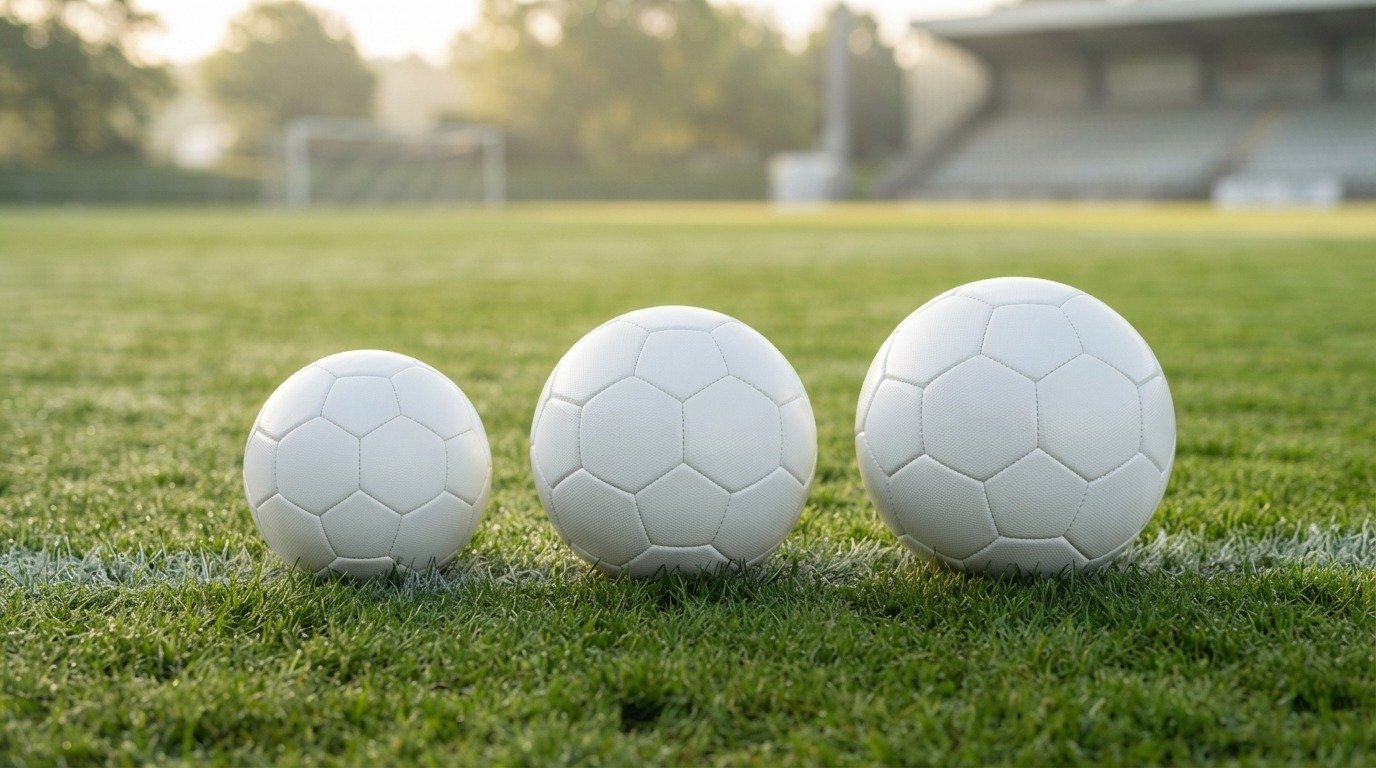
Soccer balls come in standard sizes. Size 5 is the standard adult ball, usually for players from about 12 years old. Size 4 is common for players around 8 to 12. Size 3 is for younger children. Smaller mini and skills balls are also made for promotion and practice. Futsal balls are a different type, with less bounce, so say clearly if you need one.
Step 3: Pick the Construction
The way panels are joined changes the feel, durability and price of your custom soccer balls:
- Hand-stitched: panels are sewn by hand. This gives a durable ball with a classic feel, but it takes more labor time.
- Machine-stitched: panels are sewn by machine. It is faster, consistent and usually lower in cost.
- Thermo-bonded: panels are bonded with heat and adhesive instead of stitching. This gives a very consistent shape and good water resistance.
Ask the factory which constructions they make and which suits your budget.
Step 4: Select the Cover Material
The cover affects touch, durability and price. PU (polyurethane) usually feels softer and more premium. PVC is usually tougher and lower in cost, which suits training and rough ground. Some designs also use TPU. If you are not sure, ask for samples in two materials and compare them by hand.
Step 5: Choose the Bladder and Lining
Inside the cover sits a bladder that holds the air. Latex bladders give a softer feel but tend to lose air faster. Butyl bladders hold air longer. The lining layers between the cover and bladder also affect bounce and shape. Mention how often the balls will be used, because a ball that loses pressure quickly frustrates players.

Step 6: Design and Print Your Logo
This is the step that makes custom soccer balls truly yours. Share your logo, colors and panel layout. Send artwork as a vector file such as AI, EPS or PDF, because it prints sharply at any size. If your brand colors matter, give the Pantone color codes. Ask what the print area is, how many colors can be printed, and how well the print resists rubbing and washing.
Step 7: Approve a Sample
Never skip the sample. A sample lets you check size, weight, feel, bounce, print quality and finish before you commit to thousands of pieces. Check the logo position, color match and stitching on the sample, and keep it as a reference for bulk production. Ask how long samples take and whether the sample cost is credited against a later order. [Add: your sample time and cost policy.]
Step 8: Confirm MOQ, Price and Lead Time
The minimum order quantity (MOQ), unit price and lead time depend on several things: the construction, the cover material, the number of print colors, the packaging and the order size. Ask for a written quote that lists each of these. [Add: your typical MOQ and lead time after sample approval.] Always agree the specification in writing, so the bulk order matches the approved sample.
Step 9: Production, Inspection and Shipping
During production, the factory should check size, weight, shape, bounce and air retention on sample pieces from each batch. Ask about packaging as well: single bags, boxes or bulk cartons all change the freight cost. Also ask whether balls ship inflated or deflated, because that changes how many fit in a carton. Finally, agree the shipping terms, the destination and the delivery date.

What to Send in Your First Message
A clear first message gets a faster and more accurate quote. Include:
- Quantity you want, and whether you may reorder.
- Size and type (match, training, promotional or futsal).
- Preferred construction and cover material, or your budget if you are unsure.
- Logo files and brand colors.
- Packaging requirements.
- Destination country and target delivery date.
- Your target price per ball, if you have one.
Common Mistakes When Ordering Custom Soccer Balls
These mistakes cause most problems for first-time buyers:
- Choosing the wrong size for the age group.
- Skipping the sample and discovering a problem after bulk production.
- Sending low-quality artwork, which leads to blurry logos.
- Comparing quotes that are not equal, for example one with a PU cover and one with PVC.
- Forgetting packaging and freight, which can change the final cost.
- Not agreeing the specification in writing.
Do You Need Quality-Programme Testing?
Not every ball needs it. Many training and promotional custom soccer balls are made without any formal programme. If you need a ball tested to a recognised quality programme, such as the FIFA Quality Programme, ask the factory up front whether they can supply it and ask to see the test reports. This avoids a surprise late in the order.
Custom Soccer Balls FAQ
What is the minimum order for custom soccer balls? MOQ depends on the construction, material and print. Ask for the MOQ for your exact specification.
Can I get a sample before a bulk order? Yes, and it is strongly recommended. A sample lets you check the quality and print before you commit.
Which size should I order? Size 5 is the standard adult ball, size 4 is common for ages 8 to 12, and size 3 is for younger children.
Can you print our logo on custom soccer balls? Yes. Send your logo as a vector file and your brand colors, and the factory will confirm the print area and method.
Do you ship worldwide? Yes, we provide worldwide shipping by sea and air, with flexible delivery options based on your order and destination.
Order Custom Soccer Balls From Kinetic Impex
Kinetic Impex is a manufacturer in Sialkot, Pakistan. Kinetic Impex has experience manufacturing custom soccer balls, supporting private-label orders with customized designs, colors, sizes, and brand logos. We work with sports brands, distributors and businesses to develop soccer balls tailored to their market requirements. See our custom soccer ball product page, or send your requirements on our Get a Quote page. If you also need team kits, take a look at our custom sports uniforms.

