


EVA padding is a lightweight, flexible foam that cushions the body and absorbs impact in sports gear, motorcycle protectors, helmets and workwear. If you are a gear brand, a buyer or just curious, this guide explains what EVA padding is, how it works, and where it is used. You will also learn how to choose the right type for your product.
[Yahan Table of Contents by Rank Math block lagayein]
What Is EVA Padding?
EVA padding is foam padding made from EVA, short for ethylene-vinyl acetate. EVA is a thermoplastic made by combining ethylene and vinyl acetate, and you can read the chemistry on the Ethylene-vinyl acetate page on Wikipedia. When EVA is expanded into a foam, it becomes soft, springy and light.
People search for what is EVA padding because the material appears in so many products without being named. It is inside flip-flop soles, exercise mats, shin guards, helmet liners and the soft layers of motorcycle armor. In every case it does the same job: it sits between a hard force and the body and softens the contact.
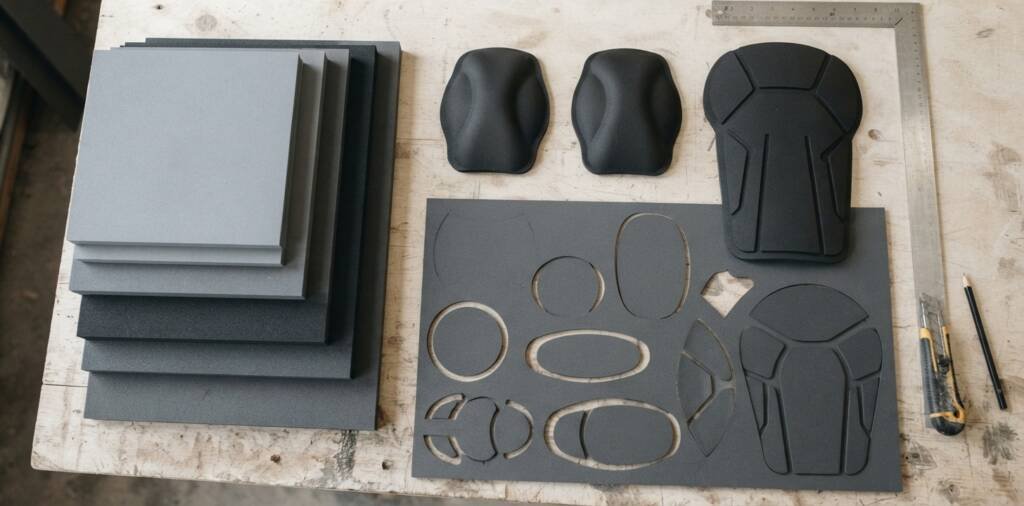
For gear makers, EVA padding is popular because it is easy to cut, shape and finish. A flat sheet can become a shoulder pad, a knee insert or a helmet liner with the right tooling.
How EVA Padding Works
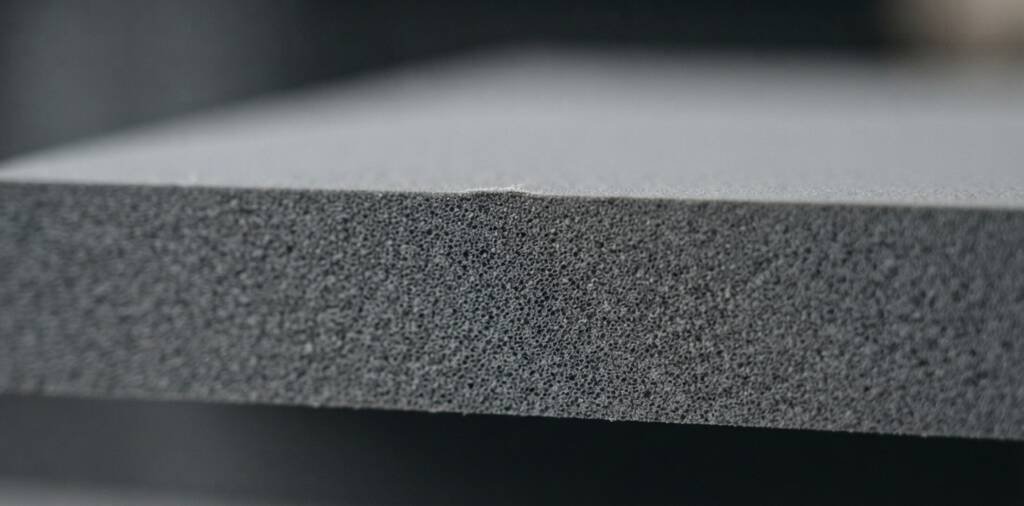
EVA padding has a closed-cell structure. Imagine millions of tiny sealed air bubbles packed together. When something presses on the foam, the bubbles compress and the pad spreads the force over a larger area. When the pressure is gone, the foam springs back to its shape.
This closed-cell design explains two other traits. First, EVA padding absorbs very little water compared with open-cell foams. Second, a well-made EVA pad keeps a consistent feel from one piece to the next, which matters when you order thousands of pieces for a product line.
EVA padding does not stop every impact. It reduces how hard an impact is felt, and how well it does that depends on thickness, density and the way the finished product is built.
Key Properties of EVA Padding
These are the properties that matter most when you choose EVA padding for a product:
- Lightweight: EVA padding adds cushioning without adding much weight, so riders and athletes stay comfortable.
- Cushioning: the foam compresses under load and spreads the force across the pad.
- Flexible and formable: it bends with the body and can be heat-formed into curved shapes.
- Closed-cell structure: it resists absorbing water, which helps in sweaty or damp conditions.
- Adjustable: makers can change density, hardness and thickness to get a softer or firmer pad.
- Easy to finish: pads can be laminated with fabric, printed, embossed or colored.
Every property has a trade-off. A very soft pad feels comfortable but may compress fully under a hard hit. A very firm pad handles sharp loads better but feels stiffer. Good padding design is about finding the right balance for the use.
EVA Padding Density, Hardness and Thickness
Three numbers describe most EVA padding: density, hardness and thickness.
Density is weight per volume, often given in kilograms per cubic meter or grams per cubic centimeter. Higher-density foam is usually firmer and holds its shape better. Lower-density foam is softer and lighter.
Hardness is how hard the surface feels when pressed. It is commonly measured on a Shore scale, explained on the Shore durometer page on Wikipedia. A higher Shore value means a harder foam.
Thickness is measured in millimeters. A thicker pad usually has more room to compress and absorb energy, but it also adds bulk.
These three settings work together. Changing only one can make a pad too stiff or too thin for its job. For practical examples, read our EVA foam density, thickness and hardness guide.
[IMAGE 2: Close-up of closed-cell EVA padding]
7 Proven Uses of EVA Padding
EVA padding appears in many industries. These seven uses are the most common in protective and sports gear.
1. Motorcycle Protective Gear
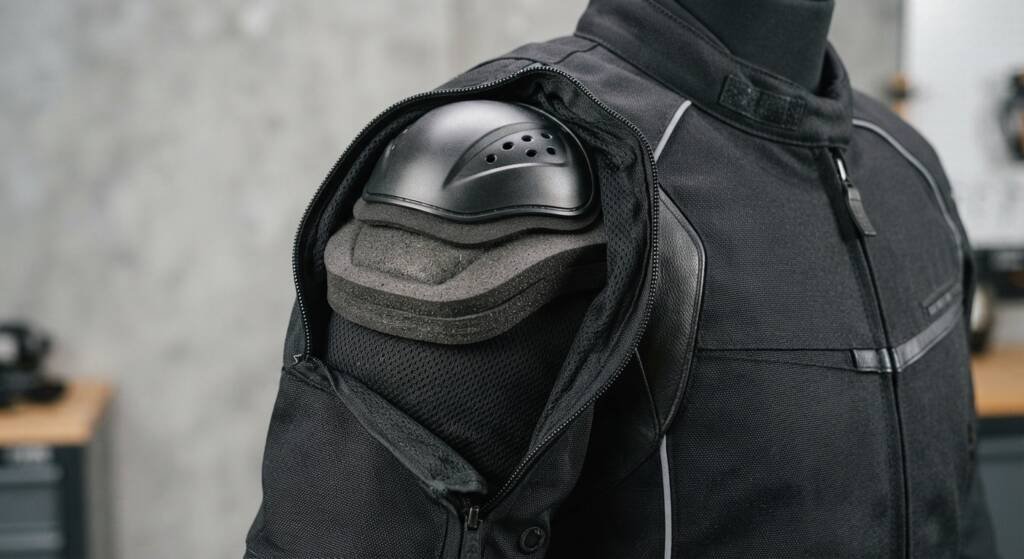
Riders wear jackets, pants and gloves with armor at the shoulders, elbows, knees and back. EVA padding is often used as a comfort and support layer around or behind harder armor, so the gear feels better over a long ride. The level of protection depends on the whole armor system, not on the foam alone.
[IMAGE 3: Motorcycle armor with EVA padding insert]
2. Football and Soccer Shin Pads
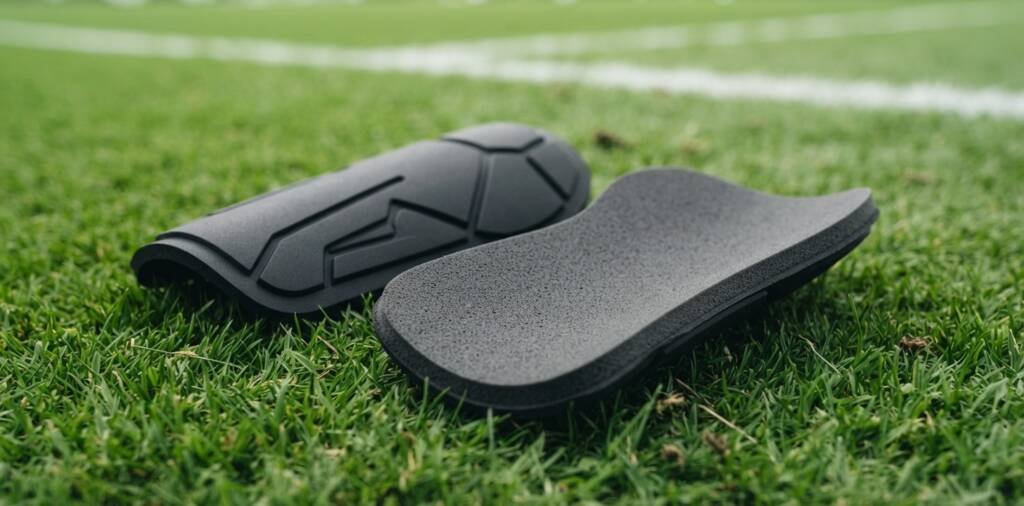
Shin guards need to absorb knocks and stay light so players can run freely. EVA padding is a common backing layer behind harder shells. You can also see our molded plastic shin guard inserts.
3. Cycling and Biking Gear
Knee, elbow and shoulder protectors for mountain biking and casual riding use light foam so the rider can pedal and move easily. EVA padding is easy to shape to the joint and easy to wash around.
4. Helmets and Headgear
Comfort liners and fit pads inside helmets and headgear often use soft foam. The impact protection of a helmet comes from its tested shell and liner system, and EVA comfort pads help the helmet fit well. See our helmet padding page for more.
5. Industrial Workwear
Workers who kneel or lean on hard surfaces use knee, elbow and shoulder pads sewn into clothing. EVA padding keeps those pads light and flexible. Learn more on our industrial workwear protection page.
6. Wrestling and Grappling Gear
Training mats and padded gear for wrestling and martial arts use EVA padding because it is soft and easy to wipe clean.
7. Footwear and Everyday Products
EVA foam is widely used in flip-flop soles, shoe midsoles and insoles, and also in garden kneelers and many foam products you meet every day.
[IMAGE 4: Football shin pad with EVA padding]
Types of EVA Padding
You can group EVA padding in three simple ways:
- By density: low-density pads are softer and lighter, and high-density pads are firmer.
- By form: flat sheets, die-cut shapes, or molded and thermoformed pieces that follow the curve of a body part.
- By finish: smooth, textured or embossed surfaces, fabric lamination, or printed logos.
The right type depends on the product. A motorcycle jacket pad needs a different shape and finish from a helmet comfort liner.
EVA Padding vs PU and PE Foam
EVA, PU (polyurethane) and PE (polyethylene) are all used for padding, but they differ in softness, recovery, durability and cost. EVA is a popular middle ground: light, easy to shape and easy to finish. For a full side-by-side look, read our guide on EVA vs PU vs PE foam for protective pads.
Limits of EVA Padding
EVA padding is useful, but it is not magic. Keep these points in mind:
- It is not a certified protector on its own. A finished product has to be tested to the standard that applies to its use.
- It can compress over time. Heavy, repeated loads can reduce the thickness of a pad, so choose density and thickness for the real workload.
- It is a thermoplastic. Very high heat can deform it, so follow care and storage guidance.
How to Choose the Right EVA Padding
Before you ask for a quote, answer these five questions:
- What will the pad protect, and from what kind of impact?
- Should it feel soft and comfortable, or firm and supportive?
- How thick can it be before the product feels bulky?
- What shape does it need to fit?
- Does it need fabric, a logo or a special surface?
With these answers, a manufacturer can recommend a density, thickness and finish and make a sample for you to test.
How Custom EVA Padding Is Made
The exact process depends on the design, but custom EVA padding usually follows these steps:
- Choose the material: pick the density and thickness that suit the use.
- Cut or shape: sheets are die-cut, or heat-pressed into molded shapes.
- Finish: pads can be laminated, printed, embossed or trimmed.
- Inspect: size, thickness and appearance are checked against the approved sample.
- Pack and ship: pads are packed for delivery or for assembly into the final product.
To see how we work, visit our manufacturing and production page or our custom EVA foam pads page.
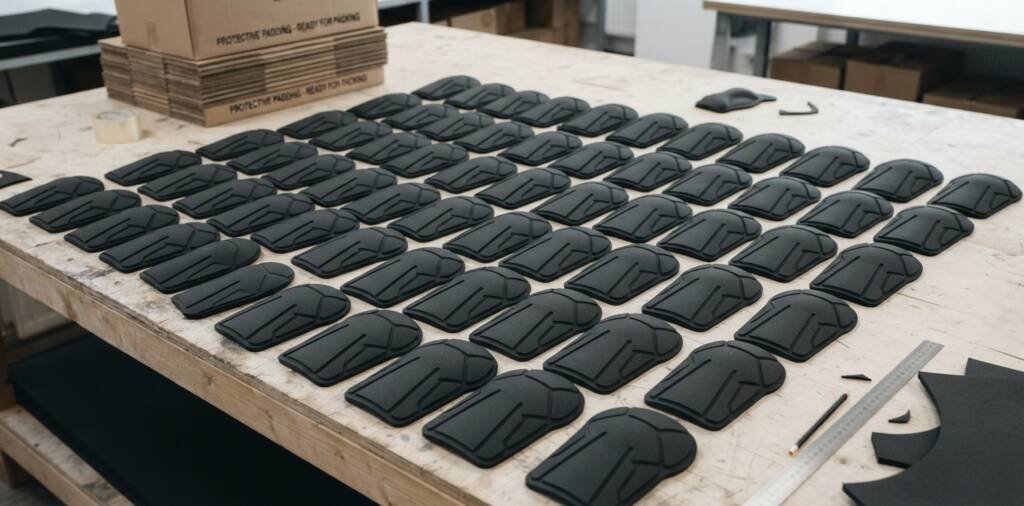
[IMAGE 5: Custom EVA padding shapes ready for production]
EVA Padding FAQ
What does EVA stand for? EVA stands for ethylene-vinyl acetate, a flexible plastic material that is expanded into foam.
Is EVA padding waterproof? EVA padding has a closed-cell structure, so it absorbs very little water. Whether a finished product resists water also depends on how it is laminated and assembled.
Can EVA padding be custom made? Yes. EVA padding can be cut or molded to custom shapes, thicknesses and densities, and finished with fabric or printing. [Add: your minimum order quantity and typical lead time.]
Is EVA padding the same as PE foam? No. Both are closed-cell foams, but they are different materials with different softness, recovery and durability.
Can EVA padding be recycled? EVA foam can be recycled in principle, but facilities for it are not available everywhere, so check local options.
Get Custom EVA Padding From Kinetic Impex
Kinetic Impex is a manufacturer in Sialkot, Pakistan, making custom EVA padding for sports, motorcycle and protective gear brands. [Add one or two lines about your experience and what you make.] Tell us what you need on our Get a Quote page and we will help you choose the right padding.

1 Comment