

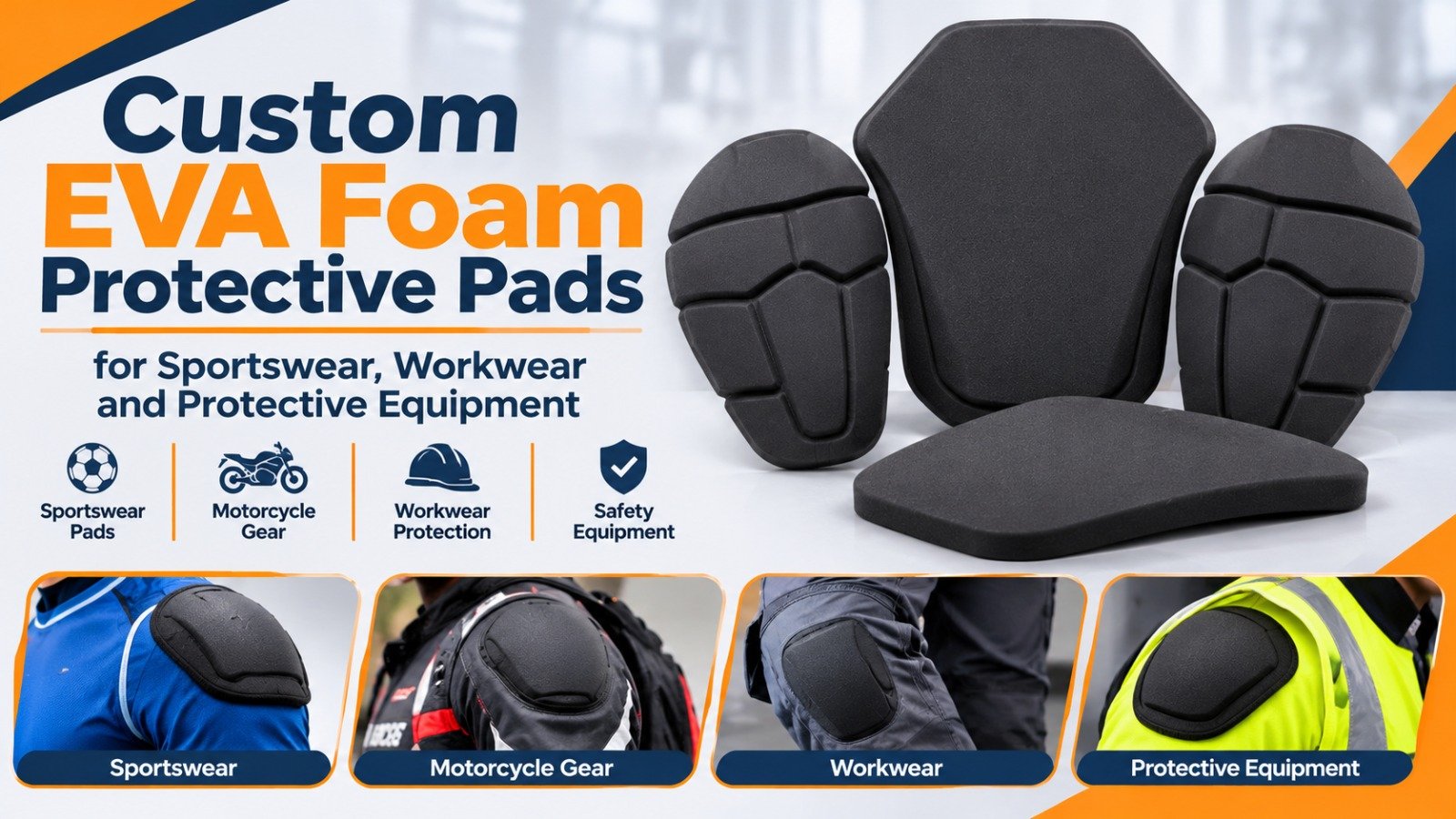
Protective padding is an important component in many products where comfort, flexibility, cushioning, and product design matter. From sportswear and motorcycle clothing to industrial workwear and specialized protective equipment, manufacturers use different types of foam padding to meet specific product requirements.
Custom EVA foam protective pads give manufacturers flexibility to develop components in different shapes, sizes, thicknesses, densities, and surface finishes. Instead of relying on a single standard pad design, brands can develop padding that fits their garment, equipment, or product construction.
In this guide, we explore how custom EVA foam pads are used across different industries, what to consider when designing them, and how OEM and ODM manufacturing can support product development.
1. What Are Custom EVA Foam Protective Pads?
EVA (ethylene-vinyl acetate) foam is a flexible, lightweight material used in a wide range of cushioning and protective applications. Its physical properties can vary depending on its formulation, density, hardness, thickness, and manufacturing process.
Custom EVA foam protective pads are foam components produced according to specific product requirements. They can be designed in different shapes and dimensions to fit inside garments, protective equipment, or other product assemblies.
Common customization options include:
- Custom shapes and dimensions
- Different thicknesses and material specifications
- Different levels of firmness and flexibility
- Embossed or textured surface patterns
- Custom pad sets and configurations
- Special cuts, profiles and edge shapes
- Integration with other components where required
These options allow manufacturers to develop padding for different applications rather than depending on a single standard design.
2. EVA Foam Pads for Sportswear
Sportswear manufacturers often require padding that fits naturally into garments while allowing users to move comfortably. EVA foam can be processed into custom-shaped components for different sportswear designs.
Football and Soccer Protective Padding
Football and soccer garments may include padding in selected areas depending on the product design and intended use.
Custom EVA foam components can be developed for:
- Padded compression shorts
- Protective sportswear
- Goalkeeper clothing
- Training garments
- Custom sports protection products
The shape, thickness, and flexibility should be selected according to garment construction, placement, and intended use.
Contact Sports and Training Gear
Different contact sports and training products may require padding in specific areas. Custom foam components can be designed to fit the garment or equipment while accounting for movement, comfort, and product dimensions.
For OEM projects, manufacturers should review the customer’s garment design or physical sample before finalizing the pad shape.
3. EVA Foam Pads for Motorcycle Protective Gear
Motorcycle clothing is another important application for custom protective padding. Jackets, trousers, and riding suits may incorporate pads in areas such as the shoulders, elbows, back, chest, hips, and knees.
Custom EVA foam components can be developed according to:
- Required pad dimensions
- Garment pocket measurements
- Shape and contour requirements
- Material thickness and firmness
- Surface pattern and finishing
- Attachment and positioning requirements
Custom Motorcycle Pad Sets
Manufacturers may also develop multi-piece pad configurations to match the customer’s product design.
For example, a custom set may include shoulder, elbow, back, chest, hip, or knee components. The number and arrangement of pads depend on the garment and the buyer’s specifications.
The final material and pad design must be evaluated against the relevant product requirements. EVA foam specifications alone do not establish an impact-protection rating or certification.
4. EVA Foam Padding for Workwear and Industrial Applications
Industrial and workwear manufacturers may use foam padding in products designed for cushioning, comfort and equipment construction.
Potential applications include:
- Padded workwear garments
- Work trousers with knee-pad pockets
- Protective clothing components
- Equipment support padding
- Custom foam inserts for industrial products
- Cushioning components for specialized applications
Custom Knee Pads for Workwear
Workwear knee pads are one example of an application where custom dimensions and product fit are important.
The design may need to consider:
- The size of the garment pocket
- The user’s range of movement
- Required pad thickness
- Material flexibility
- The way the pad is inserted or secured
The intended working environment and any applicable safety requirements should be reviewed before selecting the final material.
5. EVA Foam Inserts for Protective Equipment
EVA foam is also used in different types of protective equipment and product assemblies. Custom inserts can be developed to fit specific internal spaces or support particular product structures.
Examples include:
Helmet Padding: Custom-shaped foam components may be used in selected helmet constructions, subject to the helmet design and applicable safety requirements.
Equipment Cases: EVA foam inserts can be cut into specific shapes to hold and organize tools, instruments or other equipment.
Sports Equipment: Custom foam components may be incorporated into sports products where cushioning or product fit is required.
Specialized Protective Products: Manufacturers can develop foam components for specific product designs based on customer drawings, samples or measurements.
Each application requires its own design and material evaluation. A foam insert used for cushioning or fit should not automatically be described as certified impact protection.
6. How Custom EVA Foam Pad Design Works
A successful custom pad begins with a clear understanding of the product in which it will be used.
The design process typically considers the following factors.
Shape and Dimensions
The pad must match the available space and intended placement. Manufacturers may work from technical drawings, measurements, CAD files or physical samples.
Thickness
Thickness affects the finished component’s profile, fit and construction. It should be selected according to the product’s available space and functional requirements.
Density and Hardness
Density and hardness describe different material properties. Both should be considered when selecting an EVA foam grade, but neither alone determines the suitability or protective performance of a finished product.
Flexibility and Comfort
The foam should be evaluated in the context of the finished garment or equipment. A component that feels suitable as a loose sample may behave differently once installed in a product.
Surface Design and Finishing
Depending on the product, EVA foam pads may have smooth, embossed or textured surfaces. Custom cutting and shaping can also be used to achieve the required appearance and dimensions.
7. Manufacturing Process for Custom EVA Foam Protective Pads
Custom EVA foam pad manufacturing involves converting suitable foam material into components that match the customer’s design.
A typical production workflow may include:
- Requirement review: Understand the product application, design, dimensions and target quantity.
- Material selection: Review available EVA foam options based on thickness, density, hardness and other requirements.
- Design confirmation: Confirm the shape, measurements, surface pattern and construction.
- Cutting and shaping: Process the foam into the required component design.
- Embossing and finishing: Apply the required surface details and finishing operations where applicable.
- Sample evaluation: Review the finished pad for dimensions, fit and material characteristics.
- Bulk production: Proceed with production after specifications and samples are approved.
- Quality inspection: Check finished components against the agreed product specifications.
The exact manufacturing method depends on the material, design complexity and required production volume.
8. OEM and ODM Manufacturing for Custom Protective Pads
OEM and ODM manufacturing allow brands to develop protective padding according to their own product requirements.
OEM Manufacturing
Under an OEM arrangement, the customer generally provides an existing design, drawing, sample or detailed specifications. The manufacturer produces components according to the approved requirements.
This approach is useful for brands that already have a defined product design and need a manufacturing partner.
ODM Manufacturing
Under an ODM arrangement, the manufacturer can support product development based on the customer’s concept or initial requirements. This may include design discussions, material options, sample development and manufacturing recommendations.
The exact scope of development should be agreed upon before production begins.
9. What to Provide When Requesting Custom EVA Foam Pads
To help a manufacturer review your project efficiently, provide as much of the following information as possible:
- Product application and intended use
- Required pad shape and dimensions
- Preferred thickness, if known
- Material density or hardness requirements, if specified
- Technical drawings, CAD files or reference photographs
- Physical samples, if available
- Surface pattern or finishing requirements
- Estimated order quantity
- Target sample and production timelines
If you do not have a finalized design, a product concept or physical reference sample can still help begin the discussion.
10. How to Choose a Custom EVA Foam Pad Manufacturer
Choosing the right manufacturing partner can influence product consistency, development time and the overall production process.
Consider these points when evaluating a supplier:
Customization Capabilities: Can the manufacturer produce different shapes, sizes, thicknesses and configurations?
Material Knowledge: Can they discuss the differences between available foam grades and material specifications?
Sample Development: Can they prepare samples for design review and fit evaluation?
Manufacturing Processes: Can they support the required cutting, shaping, embossing and finishing operations?
Quality Control: Can they check dimensions, material specifications and finished product consistency?
OEM and ODM Support: Can they work from an existing drawing or help review a new product concept?
A suitable manufacturer should understand the complete product requirement, not simply offer a standard foam sheet.
11. Custom EVA Foam Pad Manufacturing at Kinetic Impex
Kinetic Impex is a manufacturer of custom EVA foam protective pads and related components, supporting OEM and ODM requirements for customers across different industries.
With manufacturing experience dating back to 2008, we work on custom pad designs for motorcycle protective gear, sportswear, protective equipment and other applications.
Our manufacturing capabilities include:
- Custom EVA foam pad production
- Different shapes, sizes and thicknesses
- Custom pad sets and configurations
- Cutting, shaping and surface finishing
- Embossed and textured designs
- In-house injection-moulded plastic components
- Sample development and bulk production support
We review customer requirements to understand the intended application, product dimensions and manufacturing specifications before discussing suitable production options.
Whether you have an existing product sample, a technical drawing or a new concept, Kinetic Impex can review your requirements for a custom manufacturing project.
Looking for a custom EVA foam protective pad manufacturer? Contact Kinetic Impex to discuss your product design, material requirements and estimated order quantity.
Frequently Asked Questions
1. What are EVA foam protective pads used for?
EVA foam protective pads are used in various products for cushioning, padding, fit and component construction. Applications include sportswear, motorcycle clothing, workwear, helmets, equipment cases and specialized protective products.
2. Can EVA foam pads be customized for different sports?
Yes. EVA foam components can be developed in different shapes, dimensions and thicknesses according to the requirements of sportswear and equipment manufacturers.
3. Can EVA foam be used in workwear knee pads?
EVA foam may be used in workwear knee-pad designs where its material characteristics and construction are suitable for the intended application. The finished product should be evaluated against relevant workwear requirements.
4. Can manufacturers produce custom EVA foam pad sets?
Yes. Manufacturers can produce multiple-piece pad sets according to customer drawings, measurements, physical samples or approved designs.
5. What information is needed to manufacture custom EVA foam pads?
Useful information includes product application, pad dimensions, thickness, material specifications, drawings or physical samples, surface requirements and estimated order quantity.
6. What is the difference between OEM and ODM EVA foam manufacturing?
OEM manufacturing generally follows the customer’s existing design or specifications. ODM manufacturing can include additional design and product-development support based on the customer’s requirements.
7. Does Kinetic Impex offer custom EVA foam pad manufacturing?
Kinetic Impex supports OEM and ODM manufacturing of custom EVA foam protective pads and related components. Customers can share drawings, physical samples or product requirements for project review.
Conclusion
Custom EVA foam protective pads can be developed for a wide range of sportswear, workwear and protective equipment applications. The right design depends on the product’s dimensions, material requirements, fit, construction and intended use.
For successful manufacturing, it is important to define the product requirements, review suitable material options, evaluate samples and confirm specifications before bulk production.
Kinetic Impex supports custom EVA foam pad manufacturing for brands and businesses seeking OEM and ODM production solutions.
Contact Kinetic Impex to discuss your next custom EVA foam pad project.
